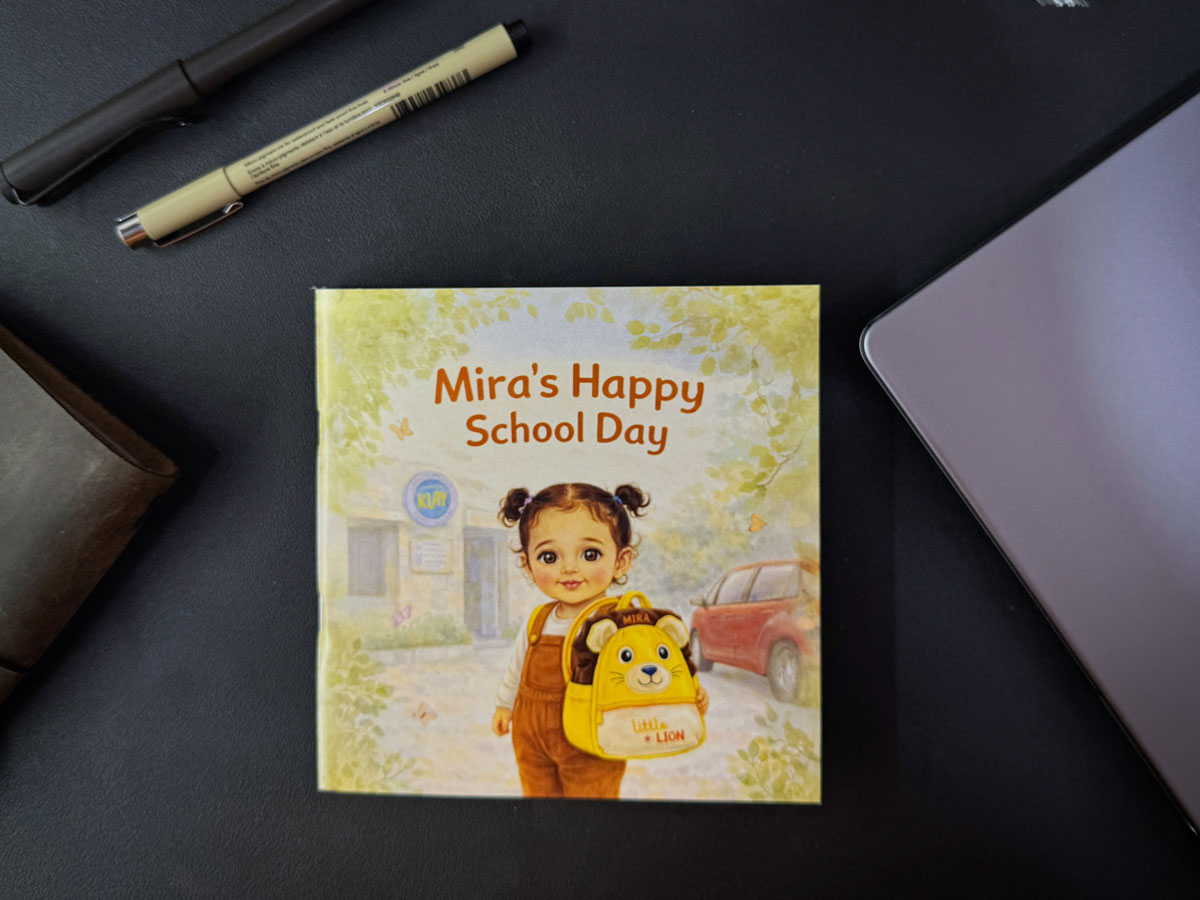
I wanted to try something new. I wanted to mix art and AI in a way that felt real.
So I made a board book for my daughter.
The idea was simple. Show her day at school. The small things she does. Walking in. Saying hi to her caretakers. Painting. Dancing. Just her world.
I started with paper.
I drew rough sketches. No detail. No polish. Just shapes and scenes.
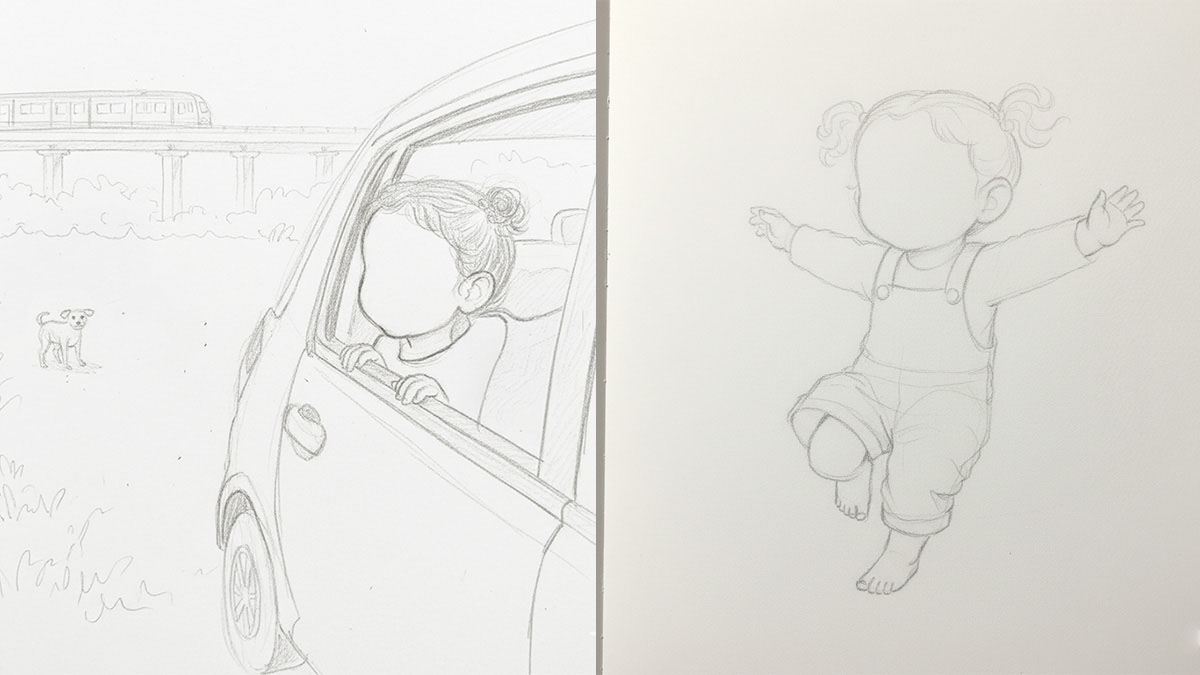
Then I used AI to build on top of them. I did not start from scratch. The sketches guided the output.
I aimed for a soft watercolor look. I kept the same colors across pages. This helped the book feel whole.
The goal was not to let AI decide. I wanted to stay in control.
For the story, I used a Qwen 3.5 model. It helped me write simple rhymes for her activities. I kept them short and easy to read.
For the images, I used Google's Nano Banana model. I created a master style prompt for the book style and a character consistent prompt for each character.This helped keep the same style and characters.
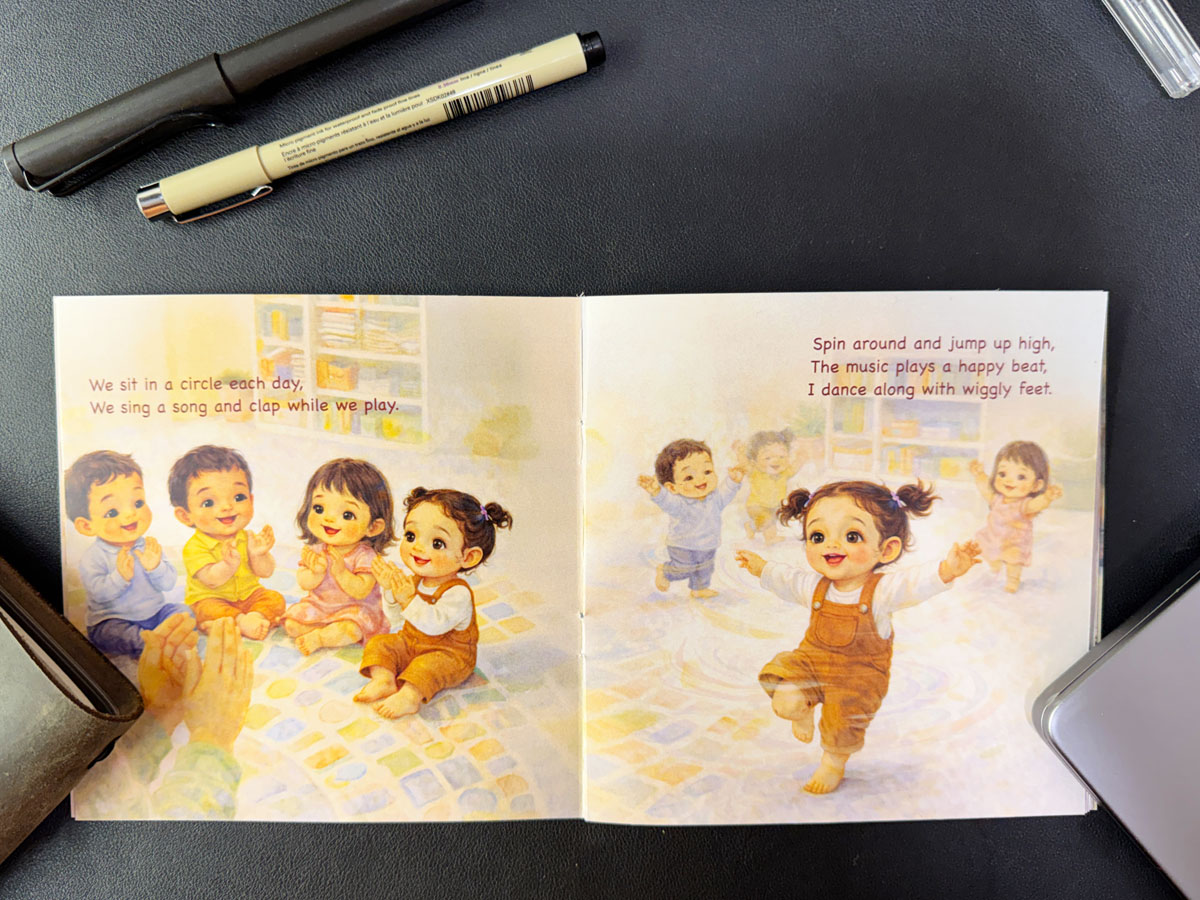
Most of the work was not in making images. It was in keeping them consistent.
When the pages felt right, I made a cover and a back cover. I treated it like a real book.
Then I printed it as a book by visiting a local print shop in 6x6 inch book.
The final product was a simple board book. It had 20 pages, including a cover and back cover. Each page had a rhyme and an illustration.
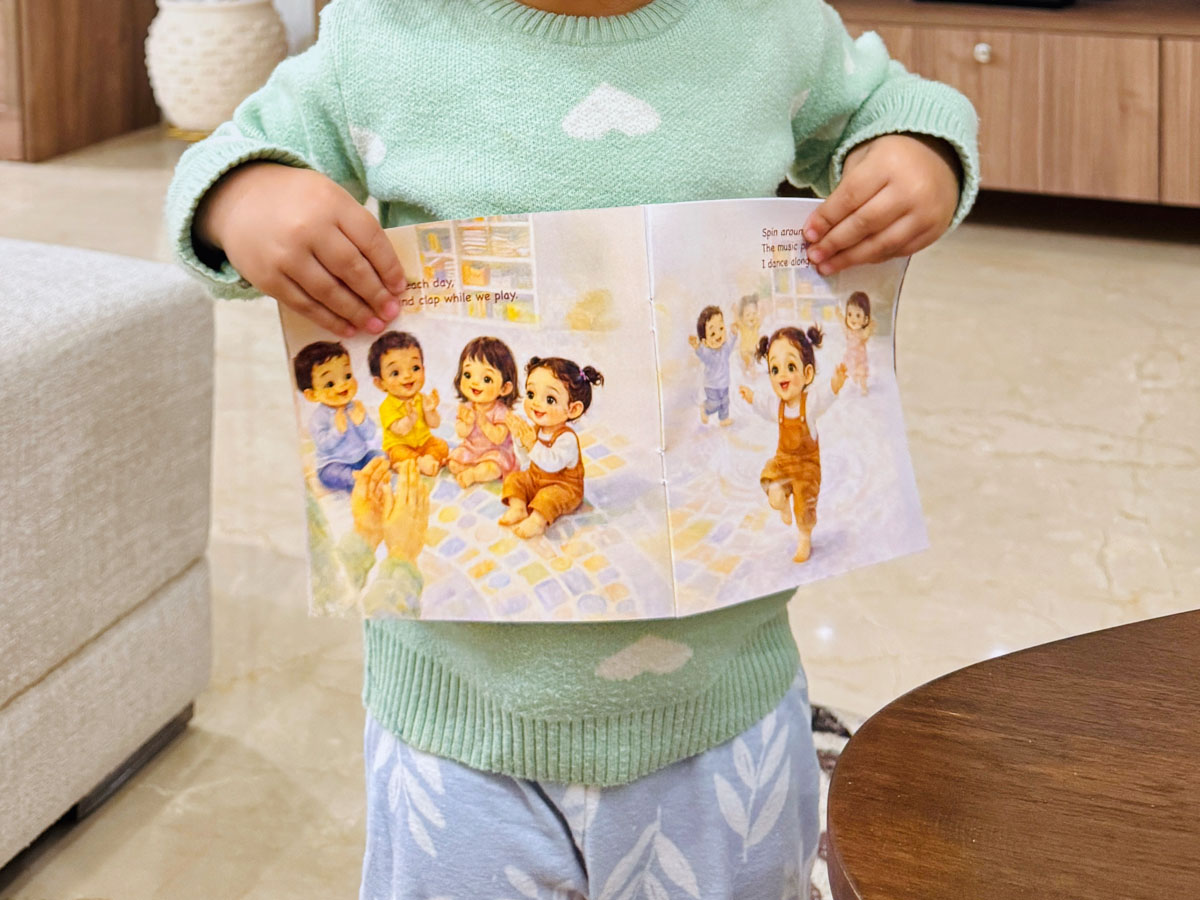
When my daughter saw it, she knew it was her. She pointed at things. She smiled. She stayed with it.
That moment stayed was magical for me.
A few things stood out after this.
Sketching first helped a lot. It kept the work clear.
AI worked best as a tool, not the source.
Keeping the style the same was the hardest part.
We showed it to school staff and they loved it. They said it captured her day well. Other parents wanted one too.